Kristen Stewart seins nus consulte son iPhone 5 qui merde à cause de Free
[Source.]
Pas super frais, mais la situation n’a certainement pas changé depuis six mois :
[…] La plupart des sites d’infos généralistes recherchent le clic car les revenus publicitaires dépendent de cela. LE CLIC ET LES CHIFFRES, LES CHIFFRES, LES CHIFFRES. Or la pub est à des prix tellement bas sur internet que la plupart de ces sites ne sont même pas à l’équilibre. Mediapart s’est distingué en mettant en place des abonnements, le New York Times a créé un « mur payant » (une limite de papiers après laquelle il faut payer) et Buzzfeed, le modèle qui a notamment inspiré Melty et Minutebuzz, aide les marques à « parler le langage du web » pour gagner de l’argent.
[…] Un journaliste web d’un site d’info généraliste traite et enrichit de la dépêche, et publie entre 1 et 7 papiers par jour : il est là pour produire toujours plus de contenus. Seulement, laissez-moi vous dire qu’après avoir édité quatre dépêches, rédigé trois articles à partir de liens ( « vigies », « lu, vu, entendu », « vus sur le web ») et torché un papier en deux heures, on a pas toujours le sentiment d’apporter une information originale au lecteur. Surtout quand tous les concurrents ont la MÊME info. Les rédactions où l’on vous donne le temps d’enquêter sont de plus en plus rares : Mediapart le fait, Rue89 a mis en place un pôle investigation, Le Monde a les moyens pour laisser travailler les journalistes et les effectifs grandissants permettent de partir en reportage.
Mais du point de vue d’un lecteur qui ne saurait pas comment fonctionne un média en ligne, il est possible qu’il ait régulièrement l’impression de lire le même papier s’il se rend sur L’Express.fr, LeMonde.fr, le Nouvelobs.com, le Figaro.fr ou 20minutes.fr (…), pour la simple et bonne raison que beaucoup de sites (Le Point, 20minutes.fr, le Nouvelobs.com) publient les dépêches des principales agences de presse brutes, sans editing et signées par l’AFP ou Reuters.
Ces agences alimentent la plupart des sites pour les infos les plus chaudes. Chaque site se dote ensuite d’éditeurs et de « Front page editor » pour enrichir et éventuellement valoriser en une ces dépêches. Ces journalistes hyper-réactifs éditent plus vite que leur ombre, apprennent aussi à faire du copier-coller comme personne, font de la veille, traitent et relisent de l’info à toute allure. À se demander si les journalistes qui sont le plus publiés sur le web ne sont pas au fond les agenciers.
Google a changé le journalisme sur Internet : les sites dépendent pour beaucoup du trafic et savent que la plus grande part de leur audience vient du moteur de recherche. L’important est ainsi de titrer un papier avec les bons mots-clés, de publier des articles qui sont susceptibles d’être référencés par Google, et d’être repéré par l’algorithme qui mettra un article dans la page Google actualités (et le plus haut possible sur la page).
Le fonds de commerce des fermes de contenu ? La production de titres avec des contenus pauvres derrière. Cela fait baver les rédacs-chef qui ont des contraintes de résultats chiffrés. Paradoxalement, les éditeurs continuent quand même à demander de l’argent à Google alors qu’il font tout pour draguer ses robots qui référencent leurs papiers habilement titrés.
kristen-stewart-seins-nus-consulte-son-iphone-5-qui-merde-à-cause-de-Free.html
« Il faut que les journalistes arrêtent de s’accrocher à leur carte de presse. Il n’y a pas qu’eux qui pourraient faire ce qu’ils font », n’hésite donc pas à lancer un directeur de médias si un journaliste a le malheur de la ramener et de souligner ce fonctionnement aliénant : « Dans la vie, je suis éditeur de dépêche de journalistes à l’AFP, créateur de liens hypertexte et d’url magiques du genre kristen-stewart-seins-nus-consulte-son-iphone-5-qui-merde-à-cause-de-Free.html » (CLIC, CLIC, CLIC, CLIC).
La ligne éditoriale est directement modifiée par Google, faut pas déconner : certains articles n’existeraient pas sans l’injonction de ces mots qu’il faut avoir à tout prix sur son site. Et il est de plus en plus fréquent que les personnes du service marketing suggèrent des « idées » aux rédacteurs en chef. Si vous avez déjà fait 12 papiers sur un sujet qui clique, le lendemain on va vous demander d’en faire un 13e même s’il n’y a qu’une ligne d’info à ajouter. Mais il faut un titre.
Et c’est assumé dans les rédacs : vous « écrivez pour être lu ». (C’est vrai que mon but dans la vie était de n’être lu que par ma mère. No shit sherlock). L’accès aux statistiques du site est donné aux journalistes. Surveiller sans cesse l’article le plus lu sur le site à la minute près est encouragé, via des outils comme Xiti ou Chartbeat. Plutôt que d’être félicité par un rédac-chef parce que mon papier a été beaucoup lu (des gens lisent tous les jours, merci chef), je préfèrerais plutôt être félicité parce que j’ai bien enquêté (sans que les deux ne soient incompatibles).
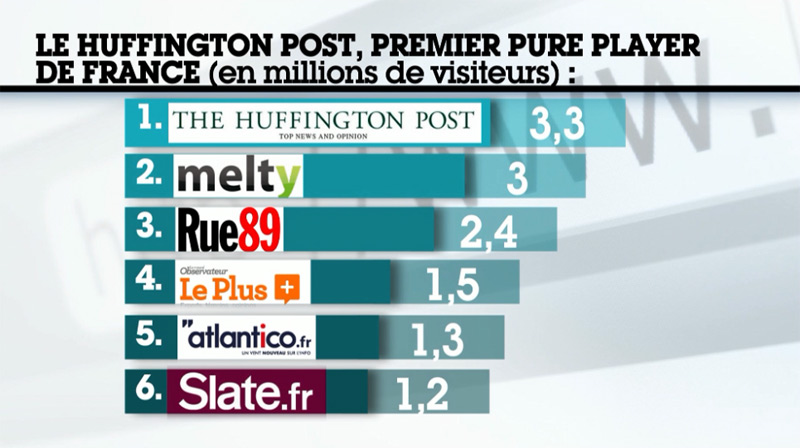
Le modèle économique semble donc tellement difficile à trouver qu’on se demande où les sites de presse vont s’arrêter avant de devenir des fermes de contenus. Certains de ces rédac-chefs lorgnent sur Melty, un site qui est tout sauf journalistique, mais qui draine un trafic important. Newsring, site de débats lancé fin 2011, évolue clairement dans ce sens, en sollicitant les internautes pour les faire réagir sur des sujets d’actualité. Ce témoignage d’une pigiste est assez édifiant quant au nombre de réactions demandées. Le problème, c’est que les lecteurs ne sont pas forcément intéressés par ce que les autres internautes ont à dire sur des sujets tels que : « Palestiniens, Israéliens, qui a raison ? »
[…] La revue de web – comme la revue de presse avant elle – est aujourd’hui le format facile employé par certaines rédactions pour évoquer des sujets qu’elles ne savent pas vraiment comment traiter. Car le bon journaliste web est celui qui sait repérer un bon buzz qui monte. C’est celui qui mettra moins de temps que les autres à publier un papier de 500 signes, en insérant trois tweets et une capture plus vite que ses confrères. Quatre heures plus tard, tout le monde a fait le même papier avec les mêmes tweets… […]
Slate.fr s’est distingué des autres en prenant le parti dès le début de faire du long avec des angles originaux, différents de ceux de ses concurrents : l’affaire Bettencourt via le faux facebook d’Eric Woerth n’est qu’un exemple parmi d’autres. Pendant les campagnes présidentielles française et américaine, ils multiplient pourtant les lives et les brèves et se rapprochent de ce que fait la concurrence.
[…] Et, pour motiver les troupes qui s’éclatent au quotidien, les contrats sont toujours plus précaires et les stagiaires occupent parfois des postes qui devraient faire l’objet de CDD ou CDI. C’est bien utile dans les rédactions web qui publient de plus en plus d’articles et qui ont besoin de petites mains.
[…] La logique cynique du clic et de la production de contenu ne s’arrête pas là. Pour multiplier les articles et donc le contenu, et donc le clic (LES CHIFFRES), le journalisme citoyen ou participatif a bien aidé les rédactions. Sous couvert d’une ouverture des rédactions aux lecteurs, aux internautes, les médias ont compris que laisser la parole aux internautes permet d’apporter toujours plus de contenus : commentaires, photos, vidéos, billets de blogs, contributions. Un internaute qui commente est un internaute qui revient et donc qui clique. Un journaliste, un expert pourront aussi contribuer ponctuellement et gratuitement, on leur dira que « c’est bon pour leur visibilité » (et LES CHIFFRES du site aussi). Newsring a les ambitions d’audience de sites comme PurePeople (ils font tous les deux partie du groupe Webedia). Le Plus, et feu Le Post avant lui, sont lancés pour aider un média existant en traitant des sujets plus buzz que LeMonde.fr et Le Nouvelobs.com.
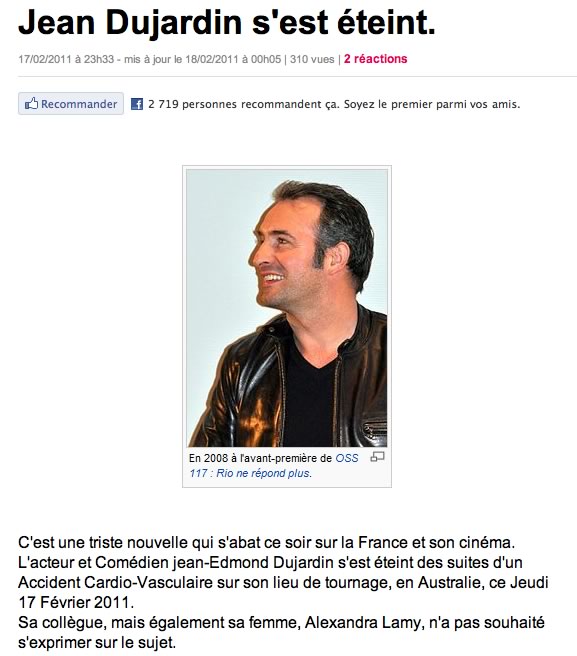
Jusqu’au dérapage : le jour où Jean Dujardin meurt (mais en fait non) selon Le Post.fr (en non vérifié). Et Le Plus publie un billet à propos d’une publicité évoquant « cette grosse qui remue me révulse » après une campagne très débattue sur le web. Deux articles, parmi d’autres, qui seront supprimés après publication.
[…]
Anonyme, 10 janvier 2012 : “Je n’avais pas signé pour ce journalisme web”.

[Photo GuysWithiPhone.]